
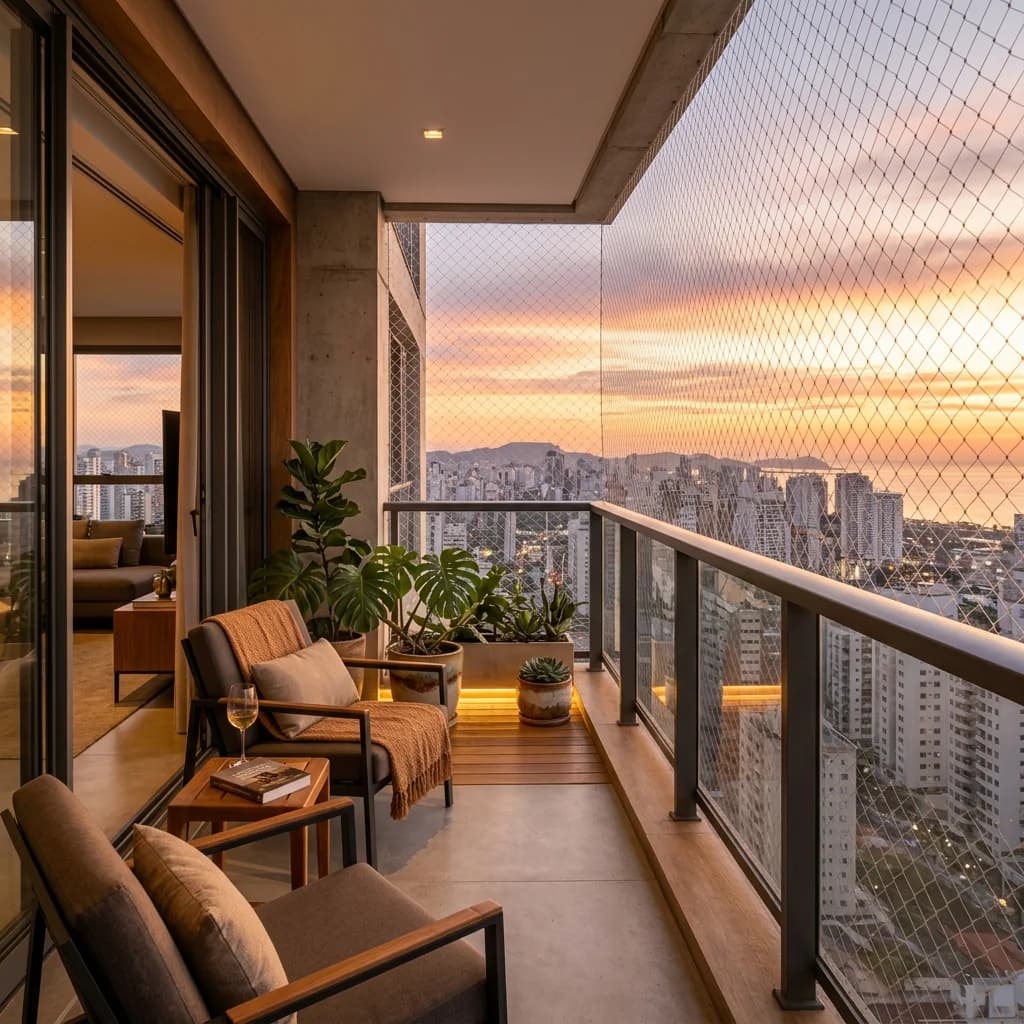
On June 20, 2026, a dramatic event in the city of São Bernardo do Campo, located in the metropolitan area of São Paulo, shocked Brazilian public opinion and reignited discussions regarding safety standards in residential buildings. A 2-year-old girl miraculously survived after falling from the third-floor balcony of a residential building. The absolute absence of a safety net on the balcony, coupled with the temporary lack of parental supervision, allowed the child to walk onto the balcony and fall from a height of approximately 9 meters (30 feet).
📌 The Real Incident and Its Legal Implications
According to official police reports, the child's mother was arrested on charges of child abandonment. Witness accounts and police investigations revealed she had left the apartment to attend a nearby social gathering, leaving the toddler asleep alone. This incident serves as a severe national alert regarding two critical pillars of child protection: active adult supervision and the immediate installation of professionally tested physical barriers.
Table of Contents
- 1. Incident Analysis in São Bernardo do Campo: The Fall Factor
- 2. Child Home Injury and Fall Statistics in Brazil
- 3. ABNT NBR 16046: Manufacturing and Installation Technical Standards
- 4. Comparative: Child Safety Netting versus Pet Protective Nets
- 5. Civil Liability, Legislation, and Building Facade Rules in Condominiums
- 6. Practical Guide to Secure Installation: Hooks, Wall Plugs, and Tensioning
1. Incident Analysis in São Bernardo do Campo: The Fall Factor
Accidental falls from residential high-rises are marked by their devastating speed. Unlike other domestic hazards where a guardian might hear a noise and intervene in time, gravity in a free fall leaves no margin for error. In São Bernardo do Campo, the toddler woke up, realized she was alone in the apartment, and was drawn to the morning light and street noises outside. Without safety netting installed on the balcony railing, a simple loss of balance at the edge was enough for a fall to occur.
The fact that the little girl survived with no critical fractures is considered an extraordinary anomaly by pediatricians and emergency responders. In the vast majority of falls from heights exceeding 6 meters (second floor), the outcomes include severe traumatic brain injury, irreversible internal bleeding, or instant death. This real case serves as a vital national reminder that physical home safety cannot be left to luck.
Residential safety engineering highlights that adult supervision of children aged 0 to 12 must always be paired with the concept of **safety redundancy**. Should an adult be distracted for a brief moment, a physical barrier must stand as the secondary line of defense. Simply advising a child not to climb windows is insufficient, as curiosity and impulsiveness are natural aspects of pediatric cognitive development.
2. Child Home Injury and Fall Statistics in Brazil
The São Bernardo incident is not an isolated event. According to historical data from the DataSUS (Brazilian Ministry of Health) and compiled by pediatric safety groups like the Brazilian Society of Pediatrics (SBP), falls are the leading cause of accidental hospitalization for children aged 0 to 14 in Brazil.
- Hospitalization Volume: Annually, over 45,000 children are hospitalized in the public health system (SUS) due to fall-related injuries.
- The Threat of Heights: While most falls occur at ground level or from furniture (beds, sofas), falls from windows, balconies, and rooftops register the highest rates of mortality and permanent disability.
- Preventability: SBP estimates that up to 90% of pediatric domestic accidents could be completely prevented by combining parental awareness with passive physical safety netting.
For pets, the numbers are equally worrying. Cats frequently suffer from what veterinarians call *High-Rise Syndrome*. Prompted by predatory instincts, felines chase flying insects or birds, lose traction on narrow windowsills, and fall, resulting in severe jaw fractures, chest trauma, and spinal injuries. For pet owners, installing nets is a fundamental act of responsible care.
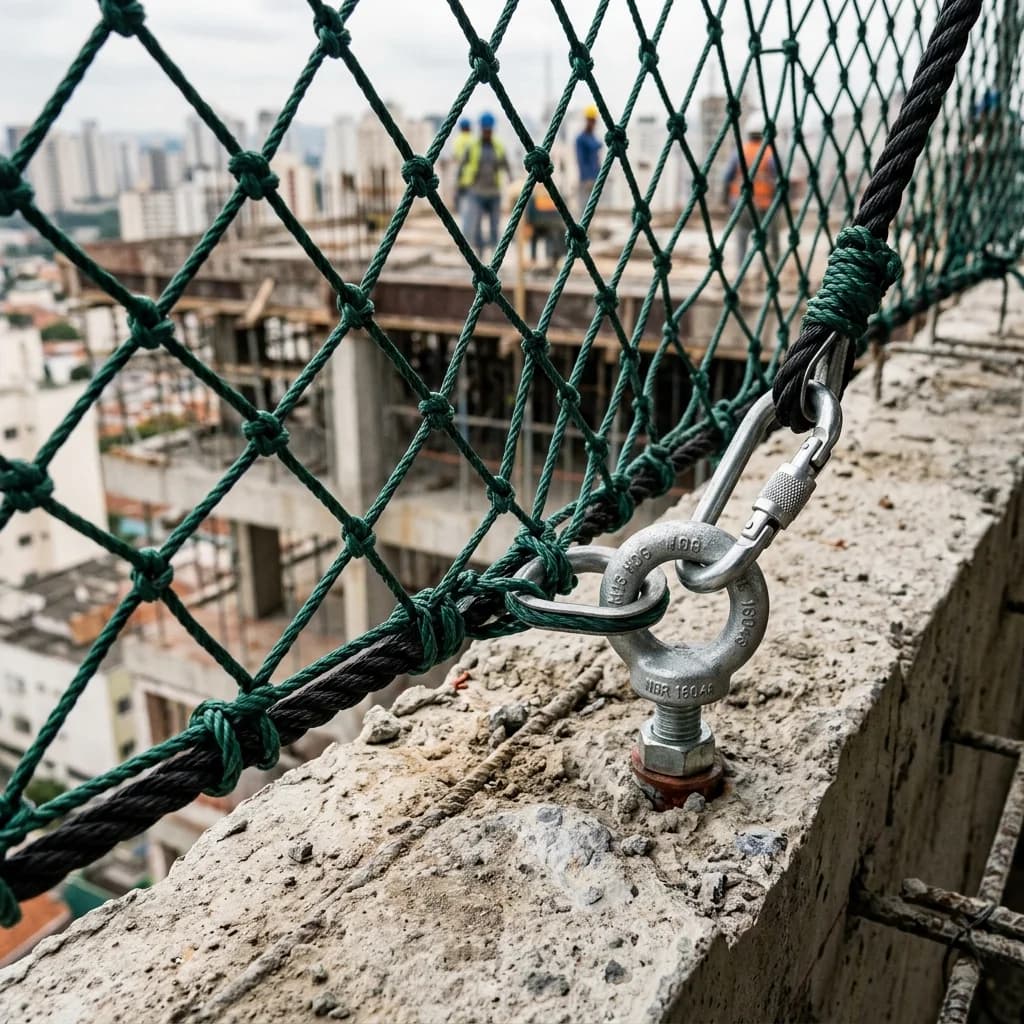
Drilling anchor hooks directly into solid concrete provides the necessary tension resistance to stop accidental impacts.
3. ABNT NBR 16046: Manufacturing and Installation Technical Standards
To prevent substandard materials from being used in balconies and windows, the Brazilian Association of Technical Standards established a strict national regulation: the ABNT NBR 16046 standard. This regulation is divided into three critical areas that every homeowner should verify:
Part 1 — Netting Fabrication
Using recycled plastics or basic monofilament fishing lines for residential safety is strictly prohibited. Nets must be fabricated from 100% virgin **High-Density Polyethylene (HDPE)** or special polyamide. The material must contain anti-UV additives to prevent sun degradation and antioxidants to protect against weathering. The minimum mechanical resistance per individual mesh grid must be at least 50 kgf, allowing the assembled structure to withstand impacts exceeding 500 kg per square meter.
Part 2 — Anchoring Elements
This section dictates that wall anchors, hooks, and boundary ropes match the net's strength. Hooks must be made of stainless steel, galvanized carbon steel, or rustproof metal alloys. In coastal regions, stainless steel is mandatory to combat sea salt corrosion. Wall plugs must be nylon and suited for the specific wall structure (solid concrete, hollow brick, or block).
Part 3 — Installation Techniques
Even high-grade nets will fail if installed incorrectly. The standard mandates that the maximum horizontal distance between anchoring hooks cannot exceed 30 centimeters (12 inches). Spacings of 40 or 50 cm create loose openings, allowing a toddler to push through the elastic gap. Furthermore, the boundary rope must weave through every single peripheral mesh square, securing the entire frame uniformly.
4. Comparative: Child Safety Netting versus Pet Protective Nets
Many families struggle to choose the correct mesh size when protecting their homes. Specifications differ based on the resident you need to keep safe:
| Target Audience | Recommended Mesh Size | Technical Rationale |
|---|---|---|
| Young Children (Toddlers) | 5x5 cm mesh | Prevents full-body falls, stops limbs from sliding through dangerously, and preserves maximum ventilation and natural lighting. |
| Cats (All Sizes) & Puppies | 3x3 cm mesh | Crucial to prevent felines from fitting their heads through (which can lead to strangulation or escapes) and resists biting/scratching. |
| Medium & Large Dogs | 5x5 cm mesh | Provides the physical strength required to absorb impact from larger animals without cluttering the window aesthetic. |
| Birds & Exotic Pets | 3x3 cm mesh or steel wire | Ultra-narrow mesh blocks escapes of small pet birds and prevents larger wild birds from invading. |
Regardless of the chosen mesh size, the net must display the manufacturer's certification label woven into the boundary rope, proving the batch has undergone standardized lab tests for tensile strength and UV weathering.
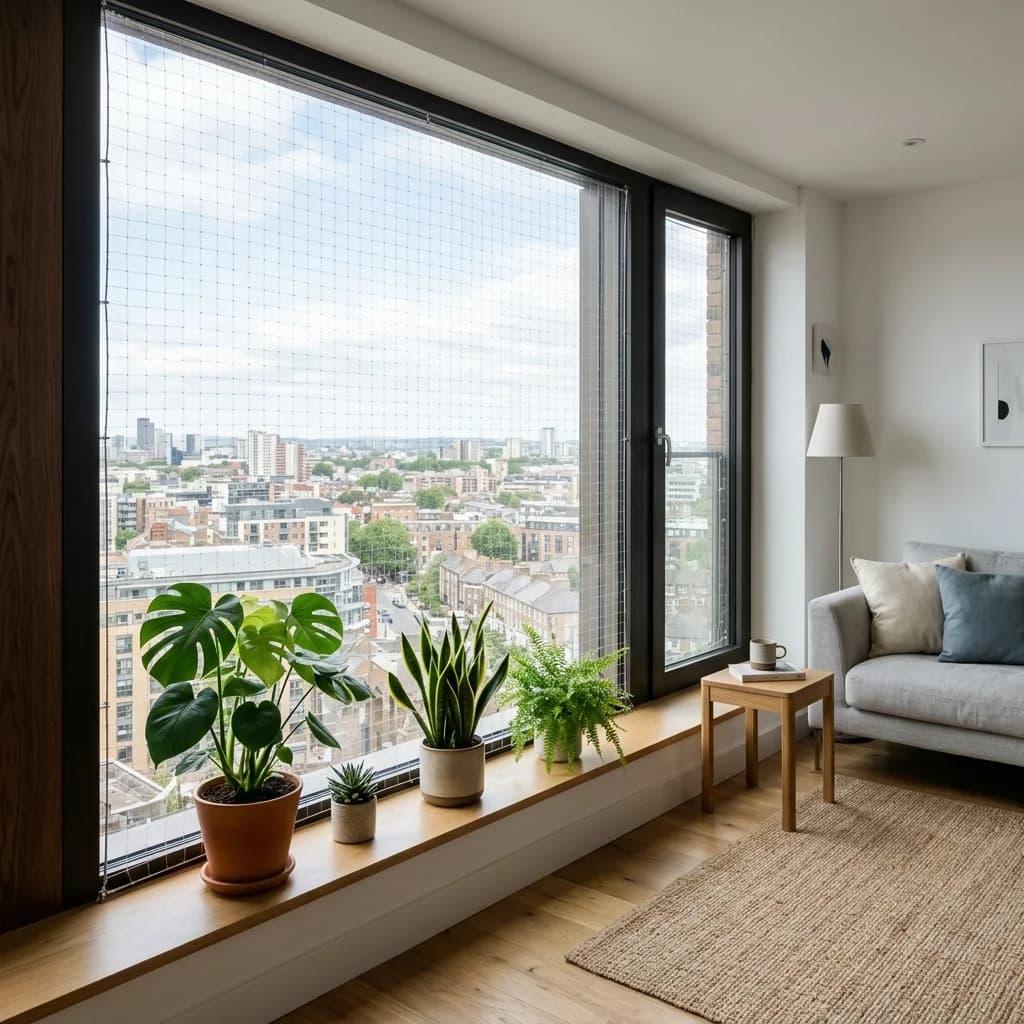
Internal window installations ensure natural ventilation is maintained with absolute peace of mind.
5. Civil Liability, Legislation, and Building Facade Rules in Condominiums
A common conflict in multi-family buildings involves condominium management and residents wishing to install safety screens. Outdated building rules or property managers often forbid installations, claiming that nets alter the visual harmony or symmetry of the building's exterior facade.
Under Brazilian law, court precedents are absolute and clear: the constitutional right to life, health, and physical safety overrides any aesthetic or architectural facade guidelines. The Civil Code protects this priority under neighborhood rights. The condominium board can specify standards to minimize visual impact (such as requiring neutral colors like grey or black, and matching hook paint to the wall color), but they can never forbid installation.
Furthermore, apartment owners bear civil and criminal liability for any accidents occurring in their unit due to negligence in omitting basic window protection. Similarly, if a rental agency refuses to allow tenants with toddlers to install safety screens, they can be held legally responsible for exposing occupants to unnecessary risks.
6. Practical Guide to Secure Installation: Hooks, Wall Plugs, and Tensioning
Many homeowners, hoping to save money, purchase generic netting online and attempt DIY installation. However, structural engineers and safety inspectors warn that this is highly risky. Critical details require professional assessment on site:
- Substrate Analysis: Old walls with weak plaster or hollow clay bricks do not provide sufficient grip for expanding anchors. A hook could pull loose under impact. Professional installers know when to use specialized toggle bolts or chemical epoxy anchors.
- Concrete Anchoring: Balconies are often structured on reinforced concrete. Drilling concrete requires heavy-duty rotary hammers and expertise to avoid damaging structural rebars.
- Even Tensioning: A loose net fails to absorb energy efficiently, potentially letting a falling body strike the hard window frame. Conversely, over-tensioning shortens net life by putting fibers under constant mechanical stress. Achieving the ideal tension requires specialized tensioning bars and field experience.
Ensure your chosen service provider delivers a formal installation warranty and certifies that their crew is fully trained in working at heights (under the NR 35 regulatory standard), guaranteeing a safe and compliant installation.
Protect Your Loved Ones with the Safety Experts
Do not delay your family's safety. At UauTelas, we work exclusively with certified netting meeting 100% of the ABNT NBR 16046 standard, installed by NR 35-certified technicians.