
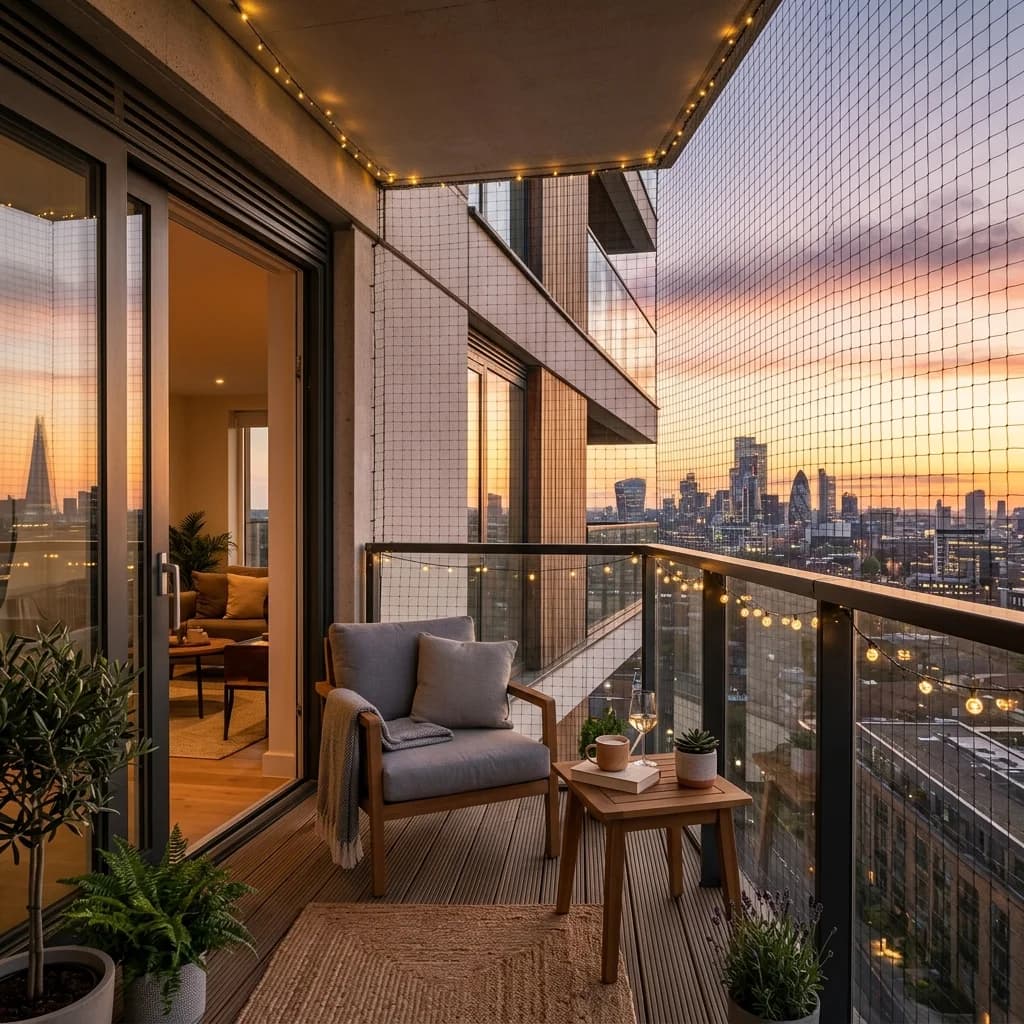
Accelerated urban growth and the preference for apartments or closed condominium houses with pools have changed Brazilian home dynamics. While recreation and panoramic views bring quality of life, they also introduce risks of accidental falls and drowning. The installation of high-quality safety nets is now recognized as a critical residential safety measure in Brazil.
📊 Residential Safety Overview
Home safety studies show that accidents on balconies, windows, and pool areas happen in fractions of a second. A brief distraction is enough for a toddler or pet to wander into danger. Permanent physical barriers are the only reliable defense against inevitable lapses in human supervision.
Article Index
1. Physics and Resistance Behind Safety Netting
Many look at the thin mesh of a safety net and wonder if it can contain a falling child or adult. The answer lies in chemical and materials engineering. Modern professional safety nets are manufactured with 100% virgin High-Density Polyethylene (HDPE), a polymer with extremely high tensile strength.
The polyethylene threads are twisted to create highly robust cords. Each net knot is designed to distribute impact energy across multiple adjacent knots, sharing the physical force throughout the structural metallic fasteners.
Additionally, HDPE is treated during manufacturing with:
- Anti-UV treatment: Protects the material against sun damage. Without it, solar radiation would degrade the mesh within months.
- Antioxidants: Prevents deterioration caused by oxygen and humidity.
In laboratory tests, a certified safety net must support static loads of over 500 kg per square meter, far exceeding the weight of children or pets.
2. Safety Netting in Apartments: Preventing Falls
Living in high-rise apartments offers great views and ventilation, but window and balcony safety is vital. Balconies, bedrooms, laundry rooms, and window areas all require netting.
For young children: Toddlers learning to crawl or walk are naturally curious and lack a sense of danger. They are drawn to open windows by sounds and wind. Sofas, chairs, or beds near windows serve as steps. Netting is the only secure way to block these hazardous openings.For cats and dogs (Pets): Cats are highly agile but frequently suffer from "High-Rise Syndrome." Chasing bugs or birds, they can lose balance on narrow sills. Dogs can get excited seeing other animals outside and attempt to squeeze through balcony gaps. Netting prevents tragic falls.
3. Pool Safety: An Alert Against Silent Drowning
Residential pools are perfect for hot days but represent significant hazards. Drowning is quick and silent; it does not resemble movie scenes with screaming. Most children fall and submerge without a sound.
Supervision is key, but fatigue or everyday interruptions create gaps. Installing tensioned pool nets or perimeter fences with self-latching gates provides a passive, fail-safe barrier.
⚠️ Pool Net Maintenance
Unlike vertical balcony nets, pool netting is exposed to chlorinated water, cleaning chemicals, and ground moisture. It requires stainless steel or specialized aluminum hooks to avoid extreme rusting, plus a high-quality tensioning system.
4. ABNT NBR 16046: The Brazilian Technical Standard
In Brazil, safety net quality is technical standard ABNT NBR 16046. This standard has three parts:
- Part 1 — Net manufacturing: Regulates chemical composition (virgin HDPE with UV blockers), minimum strength (100 kg per knot), and bans low-quality recycled materials.
- Part 2 — Fasteners and accessories: Regulates hook, anchor, and cord resistance against impact and rust.
- Part 3 — Net installation: Sets a maximum 30 cm distance between hooks to prevent gaps and ensure correct tension.
5. How to Identify a Professional Installation
Your family's lives depend on anchors, hooks, and netting. Therefore, DIY safety net installation is not recommended. A qualified professional inspects wall structure, concrete strength, and hook angles to prevent water leaks and guarantee structural safety.
| Component | Safe Standard | Risk Factor |
|---|---|---|
| Hooks | Stainless steel or zinc-plated hooks | Thin iron hooks (rust quickly) |
| Spacing | Maximum 30 cm between hooks | Large spacing (net becomes loose) |
| Cord | HDPE rope passing through all mesh edges | Common nylon thread or thin wire |
Conclusion
Home safety is non-negotiable. Installing safety netting in apartments and swimming pools prevents irreversible tragedies economically. Investing in certified ABNT-compliant materials and hiring specialized professionals guarantees safety and peace of mind.
Need Safety Nets in Campo Grande MS?
UauTelas is a specialist in installing NBR 16046 certified safety nets for windows, balconies, and pools. We guarantee maximum durability and clean installation.