

Promoting longevity and welfare in cats and dogs requires adopting preventive health measures that go beyond everyday care. Among the fundamental pillars of preventive veterinary medicine are surgical sterilization (spaying/neutering) and a complete vaccination schedule. Both topics, though widely discussed, raise frequent questions and sometimes anxiety due to real risks — such as immediate vaccine reactions and feline injection-site sarcoma. This clinical guide explores the scientific aspects of each procedure, providing transparent information from official medical and regulatory sources.
📌 Veterinary Perspective and Regulations
In Brazil, the Federal Council of Veterinary Medicine (CFMV) has updated regulations for collective sterilization procedures via Resolution CFMV No. 1,596/2024. The text reinforces that spaying/neutering is a One Health tool (integrating human, animal, and environmental health) and mandates strict quality control. Simultaneously, vaccination protocols follow international recommendations adapted to local epidemiological risks.
Article Index
- 1. What is Spaying/Neutering and How Does It Work Surgically?
- 2. Clinical and Behavioral Benefits of Sterilization
- 3. Associated Clinical Risks and the Best Age Discussion
- 4. Technical Guidelines and Regulatory Compliance
- 5. Core Vaccine Schedule for Dogs and Cats
- 6. Adverse Post-Vaccine Reactions and Allergies
- 7. Feline Injection-Site Sarcoma (FISS): Myths and Scientific Facts
- 8. Ensuring Safety in Your Pet's Care
1. What is Spaying/Neutering and How Does It Work Surgically?
Surgical sterilization in pets consists of the surgical removal of the primary reproductive organs. It is an invasive yet routine surgical procedure performed exclusively by licensed veterinarians under general anesthesia (commonly gas anesthesia combined with local nerve blocks for pain control).
In females (dogs and cats), the standard procedure is ovariohysterectomy (OVH), which involves the complete removal of the ovaries and uterus. In some modern veterinary clinics or minimally invasive (laparoscopic) surgeries, ovariectomy (OVE) is performed, removing only the ovaries, which reduces incision size and speeds postoperative recovery.
In males (dogs and cats), orchiectomy (neutering) is performed, involving the bilateral removal of the testicles through a pre-scrotal incision in dogs or a scrotal incision in cats. Stopping the production of gonadal hormones (progesterone and estrogen in females, testosterone in males) is the main factor responsible for the systemic changes observed after surgery.
2. Clinical and Behavioral Benefits of Sterilization
Veterinary studies prove that spaying/neutering drastically reduces or completely eliminates several serious reproductive tract pathologies. The main clinical benefits vary by sex and species:
- Pyometra Prevention: Uterine infection (pyometra) is a common and life-threatening emergency in intact adult and senior female dogs and cats. By removing the uterus during spaying, the risk is reduced to zero.
- Mammary Tumor Reduction: The occurrence of breast cancer is highly hormone-dependent. Females spayed before their first heat cycle have less than a 0.5% risk of developing mammary tumors. After the second cycle, the preventive benefit decreases progressively.
- Prostatic and Testicular Disease Prevention: Neutered male dogs have testicular cancer risk eliminated and present minimal rates of Benign Prostatic Hyperplasia (BPH) and prostatitis.
- Behavioral Control: There is a significant reduction in urine territorial marking, reduced irritability during heat cycles, and a decrease in dominant-aggressive behaviors.
- Fewer Escapes and Accidents: Sterilized pets lose the urge to roam, drastically reducing the risk of traffic accidents, fights, and infectious disease exposure. For physical home safety, check our guide on the Importance of Apartment Safety Netting.
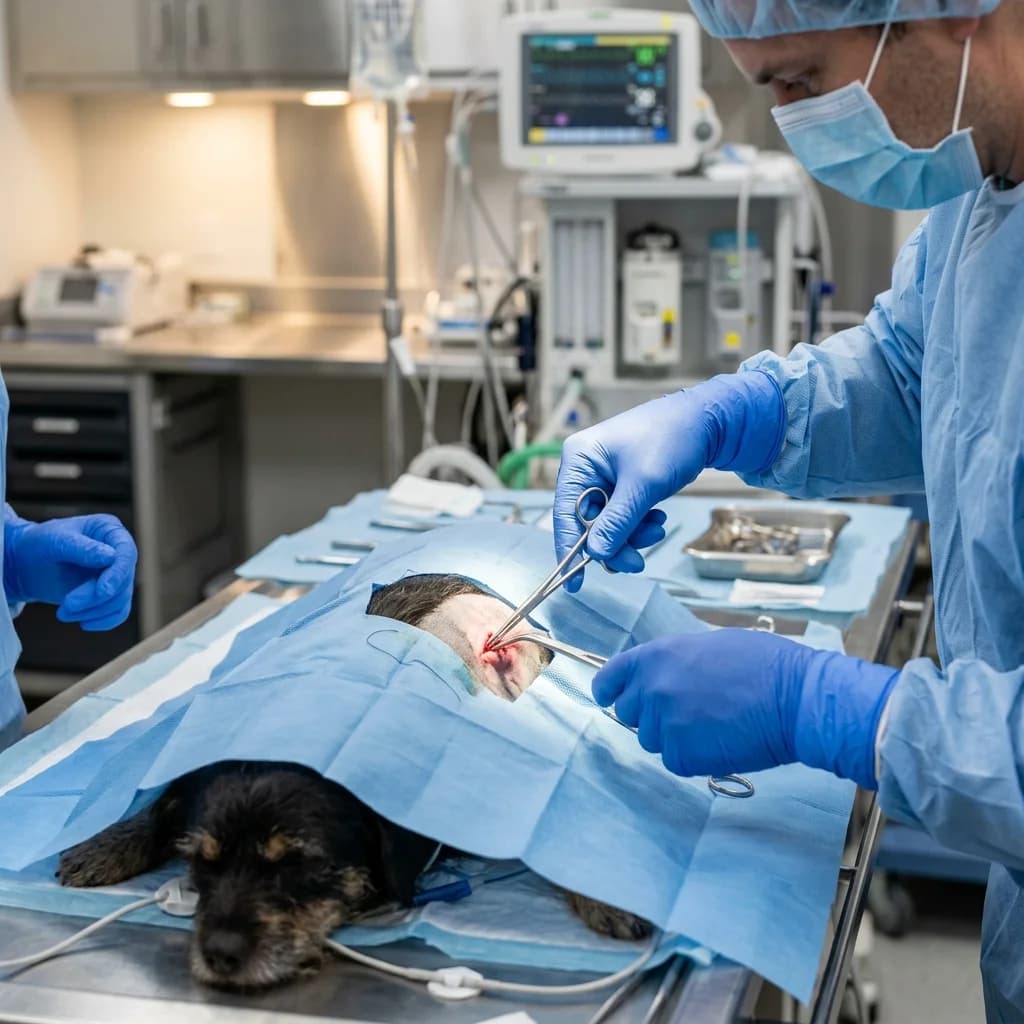
Sterile surgical procedure performed with advanced anesthetic monitoring and specialized veterinary team.
3. Associated Clinical Risks and the Best Age Discussion
While spaying and neutering are considered safe surgeries, they are not without long-term risks and side effects. The veterinary decision on the optimal timing must consider breed, size, and lifestyle.
Immediate surgical risks include anesthetic complications, hemorrhage (though rare with proper ligation technique), and surgical site infections if the pet licks the wound (making Elizabethan collars or surgical suits mandatory).
Long-term hormonal risks:
- Obesity and Lowered Metabolism: The absence of gonadal hormones decreases the pet's basal metabolic rate by up to 20%. Sterilized pets need strict diet management and regular exercise to prevent weight gain.
- Orthopedic Disorders in Large Breeds: Sex hormones regulate the closure of growth plates (epiphyseal plates). Neutering large or giant breed dogs (such as Golden Retrievers, Labradors, Rottweilers, Great Danes) before 11-12 months can lead to disproportionate bone growth, increasing the risk of hip dysplasia and cranial cruciate ligament (CCL) tears.
- Estrogen-Responsive Urinary Incontinence: Some early-spayed female dogs may develop urinary incontinence in adulthood due to urethral sphincter weakness caused by estrogen deficiency.
Optimal Age: Modern guidelines recommend spaying/neutering around 6 months for cats (both sexes) and small dogs. For large breed male dogs, waiting for skeletal maturity (12 to 18 months) is preferred to minimize future osteoarticular disorders.
4. Technical Guidelines and Regulatory Compliance
To prevent animal welfare abuse, veterinary boards enforce strict parameters on sterilization campaigns (such as mobile units or high-volume clinics).
These regulations require a registered Technical Director (vet) for every campaign, adequate sterile surgical infrastructure, appropriate pain management drugs, and close postoperative monitoring until patients fully recover reflexes.
Chemical sterilization (acid intratesticular injections) and long-term use of anti-heat hormonal contraceptives are strictly discouraged or banned due to high risks of uterine infections, severe tissue necrosis, and mammary tumors.
5. Core Vaccine Schedule for Dogs and Cats
Vaccination is the most successful preventive health strategy to control severe infectious diseases and zoonoses (diseases transmissible between animals and humans, like Rabies).
Dog Vaccination Schedule:
- Core DHPP/Combination Vaccine: Protects against Distemper, Parvovirus, Adenovirus/Hepatitis, and Parainfluenza. Begins at 6-8 weeks of age, requiring 3 to 4 booster doses every 21-28 days.
- Rabies Vaccine: Single dose administered after 4 months of age, with annual or triennial boosters. Rabies is 100% fatal once clinical signs appear.
- Non-core/Optional Vaccines: Canine Influenza, Bordetella (Kennel Cough), Giardia, and Leishmania (in endemic zones).
Cat Vaccination Schedule:
- FVRCP/Combination Vaccine (F3/F4/F5): F3 protects against Panleukopenia, Rhinotracheitis, and Calicivirus. F4 adds Chlamydia protection. F5 adds Feline Leukemia Virus (FeLV) protection. Cats with outdoor access or living in multi-cat settings should receive FeLV protection after testing negative for FIV/FeLV.
- Rabies Vaccine: Single dose annually or triennially starting at 4 months.
Read our article on Insect Screens and Disease Vectors to learn how to keep disease-carrying pests away from your pet at home.
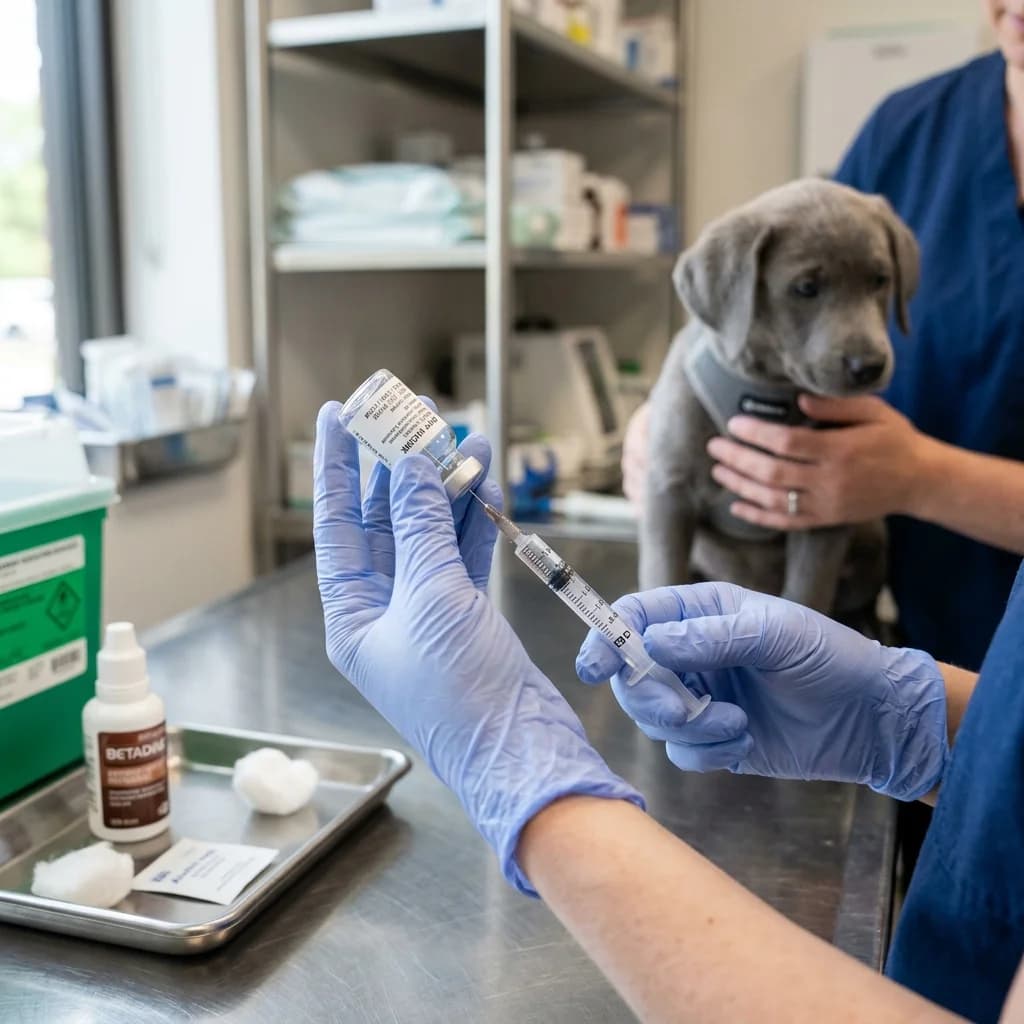
Correct vaccine handling and sterile single-use needles prevent localized contamination.
6. Adverse Post-Vaccine Reactions and Allergies
Administering any immunizing agent can induce physiological side effects as the immune system responds. In most cases, these reactions are self-limiting and resolve within 48 hours.
Common mild reactions include temporary lethargy, mild soreness at the injection site, a small firm lump under the skin (local inflammatory response to the vaccine adjuvant), and a mild fever.
Severe allergic reactions include immediate anaphylactic shock (collapse, profound hypotension), facial edema (swelling of muzzle and eyelids), dyspnea (difficulty breathing), and severe pruritus. These severe reactions occur within 30-60 minutes post-injection and require urgent veterinary administration of epinephrine, antihistamines, and corticosteroids.
7. Feline Injection-Site Sarcoma (FISS): Myths and Scientific Facts
Feline Injection-Site Sarcoma (FISS) is a highly aggressive malignant tumor (usually a fibrosarcoma) arising in the subcutaneous tissues of domestic cats. Historically termed "vaccine sarcoma," research proved that chronic local inflammation in predisposed cats can be triggered by any injectable substance with an acidic or irritating pH, not just vaccines. Long-acting antibiotics, steroids, and microchips can also trigger oncogenesis.
Real Statistical Data: FISS is statistically rare. Epidemiological studies estimate an incidence of 1 case per 10,000 to 20,000 vaccinated cats. The mortality and suffering from diseases that vaccines prevent (such as Panleukopenia, which has a kitten mortality rate exceeding 90%, or Feline Leukemia - FeLV) are infinitely higher than the risk of developing a sarcoma.
Prevention Guidelines (AAFP - American Association of Feline Practitioners):
- Injection Site Rotation: Avoid injections in the scruff/interscapular area, where surgical removal of sarcomas is extremely difficult due to lack of margin. Vaccines should be administered distally in the limbs: Rabies in the lower right leg, FeLV in the lower left leg.
- The 3-2-1 Rule for Biopsy: A lump at the injection site should be biopsied if it: persists for more than 3 months; grows larger than 2 cm; or increases in size 1 month after injection.
- Adjuvant-Free Vaccines: Use recombinant or non-adjuvanted vaccines whenever available to minimize tissue inflammation.
8. Ensuring Safety in Your Pet's Care
Integrative pet health requires balance. Discuss timing and specific breed risks with your trusted vet. Keeping a secure home environment with certified safety nets is part of responsible ownership. Learn about engineering safety standards in our Guide to the ABNT NBR 16046 Standard.
Scientific Sources & Clinical References:
- Federal Council of Veterinary Medicine (CFMV). Resolution CFMV No. 1,596/2024 - Animal Sterilization.
- American Association of Feline Practitioners (AAFP). Feline Vaccination Advisory Panel Guidelines. Journal of Feline Medicine and Surgery.
- World Small Animal Veterinary Association (WSAVA). Vaccination Guidelines for New Puppy and Kitten Owners.
- Hart, B. L., et al. (2020). Assisting Decision-Making on Age of Neutering for Mixed Breed and Purebred Dogs of Various Sizes. Frontiers in Veterinary Science.
- Association of Shelter Veterinarians (ASV). Veterinary Medical Care Guidelines for Spay-Neuter Programs.
- Mendonça, E. A. (2022). Feline Injection-Site Sarcoma (FISS): Clinical-Pathological and Epidemiological Study. Federal University of Minas Gerais (UFMG).
- Ministry of Health, Brazil. Manual of Surveillance, Prevention, and Control of Rabies.
- Regional Council of Veterinary Medicine of São Paulo (CRMV-SP). Technical Guidelines for Population Control Campaigns.
- Brazilian Society of Pediatrics and SOBRASA. Child and Pet Fall Statistics.
- Schlafer, D. H., & Gifford, A. (2018). Pyometra in Canine and Feline Reproduction. Veterinary Clinics of North America: Small Animal Practice.
Hashtags: #PetHealth #SpayAndNeuter #DogVaccines #CatVaccination #FISS #ResponsibleOwnership #PreventiveVeterinaryMedicine #PetCare #RabiesPrevention #OneHealth #UauTelasHealth